

|
|
 |
Articles
January 5, 2014
The Mayan Civilization and drought: Are we headed down the same road?Excerpt from "The Watchman's Rattle"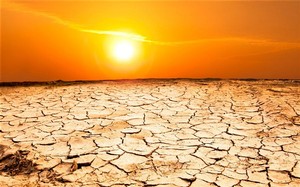
As rainfall levels declined, fifteen million Mayan citizens never came face-to-face with their deteriorating situation. The population was exploding, the need for water was rapidly escalating, and the annual rainfall was declining. Conservation was a good short-term strategy, but this was not the same as putting all of the society's energies toward permanently solving a problem they knew would eventually be catastrophic. Three thousand years is a long time for a civilization to implement a plethora of solutions. They could have sent out exploration parties, dug more wells, relocated large parts of the population, even constructed more reservoirs and cisterns at a faster rate. Any of these actions would have eased drought pressures. But climate change was too complex of a problem to comprehend, let alone resolve, so the Mayan civilization simply reached an impasse. For a time there were a few Mayan strongholds who resisted the temptation to succumb to beliefs alone. One small Mayan community known as the Lamanai; located in what is now Belize, outlasted many Mayan cities by as much as three hundred years because they continued to pursue logical solutions to the drought. Archaeologists have recently uncovered an ingenious network of underground cisterns that the Lamanai instituted to channel scarce groundwater into subterranean vessels. These vessels protected the water from evaporation and provided natural refrigeration for dwindling food supplies. There is evidence that the Lamanai continued to work their underground storage systems well into the worst periods of drought, when other Mayan cities had already turned exclusively to mystical solutions. The Lamanai are distinguished by their continued pursuit of both knowledge and beliefs; they were determined to solve problems both scientifically and ritualistically rather than abandon one in favor of the other. Had the drought not persisted, it is probable that the Lamanai would have survived the great Mayan collapse. Regrettably, as water shortages continued, the Lamanai also fell into the trap of substituting facts with beliefs. As underground cisterns grew dry, they too began using cisterns as chambers for sacrifice. Although archaeologists have determined that these drastic measures occurred much later among the Lamanai than other Mayan communities, recently unearthed human remains of mutilated women and children now provide evidence that, over time, the Lamanai followed the footsteps of other Mayan factions. So, here's the real mystery: Rather than persist with rituals that produced no result, why didn't the Mayan Empire continue to pursue rational solutions to the drought—a problem they knew, for thousands of years, might lead to their demise? We now know the answer. They encountered a cognitive threshold: As the complexity of their situation grew, the Mayans never developed complex problem -solving techniques. So, when methods designed to solve simpler issues began to fail, beliefs rushed in to take the place of knowledge. Then, with each in heritance, problems with drought, disease, and civil unrest grew to the size of the Mayan temples themselves, until finally, one or several of the problems conspired to eradicate a once powerful, thriving civilization. Which begs the question: Are we better equipped to handle a complex problem such as drought today? This excerpt is from Rebecca's book The Watchman's Rattle - for more information, click here |
|

Articles
2021
October
July
February
2020
March
2019
December
January
2018
February
January
2017
December
October
September
August
July
Article Archive >
|
 |
|
 |