

|
|
 |
Articles
December 29, 2013
A Thriving 3,000-year CivilizationExcerpt from "The Watchman's Rattle"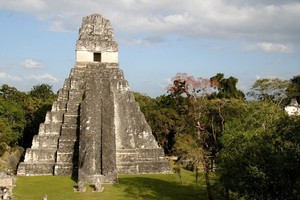
The following excerpt is from Rebecca's book The Watchman's Rattle for more information, click here Between 2600 BC and 900 AD, the highly advanced Mayan civilization spanned what are now Mexico, Guatemala, Honduras, El Salvador, and Belize. Archaeologists speculate that the empire grew to over fifteen million citizens, with population densities equal to Chicago today. Imagine a massive, thriving society-located in the middle of one of the most hostile environments known to human kind - without any of the technology or modern conveniences we depend on today: No electricity or trucks, no telephones or police. How was order maintained for millions of people over such a vast geography? Food distributed? Garbage, sewage, and education managed? Many people know that the Mayans were master potters, weavers, architects, and farmers, but even by modern standards the prodigious reach of the Mayan civilization represented an unfathomable leap in human achievement. Despite colossal environmental challenges, the Mayans invented a sophisticated cylindrical calendaring system, celestial charts to track weather patterns, the most advanced written language developed at that time for expressing complex ideas, and mathematics that included the revolutionary concept of "zero." They also engineered elaborate hydraulic projects that included a complex maze of public reservoirs, canals, dams, and levees. On virtually all fronts, the Mayans progressed rapidly, achieving quantum breakthroughs in technological, organizational, and artistic innovation. Then, about a thousand years ago, sometime between 750 AD and 850 AD, the majority of the Mayan people suddenly disappeared. In a single generation, the society collapsed. Why? The prevailing theory is that the Mayan civilization met a "sudden death" because of severe drought. Professor Gerald Haug is the best-known proponent of this view. Core samples from the Caraico Basin show that three long droughts correspond to the same time frame when Mayans abandoned their cities. "These data suggest that a century-scale decline in rainfall put a general strain on resources in the region, which was then exacerbated by the abrupt drought events." But according to Jared Diamond, author of Collapse: How Societies Choose to Fail or Succeed and professor of physiology and geography at UCLA, the rise and fall of civilizations can be traced to a dramatic change in environmental conditions. Diamond explains the early success of the Mayan civilization in terms of favorable water, food, temperatures, minerals, and other conditions conducive for a small society. Conversely, as the population grew and one or more of these conditions changed, progress stopped, conditions deteriorated, and citizens disbanded. In the case of the Mayans, deforestation may have started a disastrous chain of events. From my standpoint, I agree with all theories regarding the events that led to the Mayan collapse. How's that possible? Simple. I am not particularly interested in what happened. I'm curious about why it happened - and whether it really happened overnight. What occurred before the final event(s) responsible for the collapse of the Mayans, the Romans, the Egyptians, and the Khmer, Ming, and Byzantine empires? Did these societies adopt any behaviors - any ways of thinking - that made them vulnerable to failure? And if they did, are we repeating that pattern today? |
|

Articles
2021
October
July
February
2020
March
2019
December
January
2018
February
January
2017
December
October
September
August
July
Article Archive >
|
 |
|
 |