

|
|
 |
Rebecca CostaProblems of ComplexityCommercial Therapy
November 8, 2010
There's a framed photograph above the monitor on my desktop. It's of a stencil that was on the wall of the Tate Modern members room and is a numbered 10 point checklist titled: How to Work Better. The second item on the list is: Know the Problem. I think most people running organisations understand the importance of knowing the problem; being able to define it and put a name to it. On the other hand, I think one of the biggest problems that many organisations have is the inability to understand different generic types of problem; being able to define them, put a name to them. Atul Gawande is at hand to help them with a definition in his book The Checklist Manifesto. In short, you should read this book. In the meantime I'm about to quote a big fat chunk of it. Gawande refers to the work of Brenda Zimmerman of York University and Sholom Glouberman of the University of Toronto. These two professors study the science of complexity and:
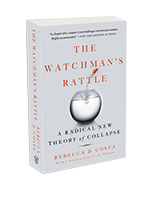
The issue is that different types of problem require different approaches and different expectations of success. If your organisation is dealing with a simple problem, you should expect to succeed in dealing with it. If you are trying to solve a complex problem, you should expect to fail. This thinking is backed up by another author interested in complexity, Rebecca Costa whose book, The Watchman's Rattle, is discussed in this article by Oliver Burkeman. Costa defines complexity as when:
When faced with a complex problem, she seems to point to the approach my old chemistry teacher advocated for education: throw lots of mud at the wall in the hope that some of it sticks. Which is funny, because the first item on my How to Work Better list is: Do One Thing at a Time. This would seem a common sense approach to any problem. However, when dealing with a Complex Problem it seems that you can't solve it with common sense…or a process…or expertise…or even the way you solved it last time. The best approach is to try as much as possible, all at once, again and again. Oh, and expect to fail. Lots. |
|
 
|
 |
|
 |