|
|
 |
Rebecca CostaSociobiology and PackagingPacking Europe
October 13, 2014
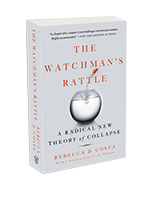
Acclaimed sociobiologist Rebecca Costa, who will be taking part in the Dieline Summit next month, shares with Tim Sykes her analysis of the interaction of human biology, technology and society - and the implications for packaging. TS: Much of your thinking and writing as a sociobiologist centres around the interaction of humans with a world of ever increasing complexity. Could you summarise the challenges that you diagnose? RC: According to Eric Schmidt, the executive chairman of Google, every 48 hours we produce as much new data as we generated from the dawn of humankind to 2003. This has created a condition wherein, at any point in time, we must make decisions, and act on, a miniscule subset of available facts. It doesn't matter if we are deciding whether to go to war, which medical treatment is best, how to invest for retirement or which packaging materials are most environmentally friendly or cost-effective. The truth is, it has become impossible for leaders, executives, and the person on the street to access, and analyse, the data which is necessary to make rational, empirically-based decisions - decisions which have a higher likelihood of being correct. My work in sociobiology has led me to conclude that we have entered a 'high failure rate environment' where there are many more wrong choices than right ones and the number of wrong ones is exponentiating by the pico second. But if there is a dramatic discovery to be made - it is that we are not the first to encounter this condition. All societies throughout human history have faced similar challenges. That is because the root of the problem is congenital: the discrepancy between the very slow rate at which human physiology (specifically, our brains) can adapt, and the accelerating speed at which progress moves, causes a natural gap to occur. Throughout human history we can observe that gap widen - eventually producing a condition wherein vital decisions - and eventually public policy - become too complex, too unwieldy for the human brain. Once this occurs, decisions are no longer based on facts, but rather on opinion, dogma, superstition, prehistoric emotions, etc. This is why, the little understood relationship between biology, technology, and public policy, will play an increasingly important role in forging better decisions for humankind. To this point we have not understood this intersection, but we are beginning to see that each affects the other in traceable ways. To bring the inter-relationship home, let's take a simple example like driving. A few years ago we discovered that a disproportionate number of accidents were being caused by distracted drivers who believed they could text and also drive a two-tonne vehicle at the same time. If ever there was an example of how far we have drifted from understanding the limitations of human biology this was an excellent case in point. So, many governments were forced to enact legislation which outlawed the use of cell phones while driving. But along comes self-driving cars - which we can assume will make texting while driving permissible again. Thus owing to new technology, public policy will have to change yet again. Because human beings do possess the ability to ride as a passenger in a self-driving car and text. It's a simple example of how the relationship between biology, technology and public policy works - how each affects the other. Another example might be the use of the word 'organic' on packaging where in governments stepped in to establish organic labelling requirements. But soon the use of pesticides, chemical soil amendments, etc. will become moot as nanobots smaller than the size of a human cell and programmed to eliminate disease as well as administer the nutrients the plant requires will replace the agents which have been described as non-organic. So policy will change yet again. How will we classify nanobots which are far less harmful than naturally occurring bacteria in food? How will labelling change? How will markets and producers adapt? TS: In broad terms, in what ways can we (individually, socially) respond to these challenges? And are we equipped to do so? RC: We may well be the first humans to have the knowledge and tools to avoid a repetitive pattern of sudden unilateral failure. First, because millions of years of evolution has graced humankind with the ability to look ahead. Humans are the only species which can conceive of tomorrow. But not only tomorrow. The day after, and the day after that. We are masters at doing thought experiments - at previewing future events - and then analysing the repercussions of our actions, and then conducting lightning speed risk assessments of actions we have not yet performed in response to events which have not yet occurred. There can be no greater evolutionary asset that the ability to anticipate danger and then craft an action in the present to neutralise, or minimise, that threat. What we are talking about is the ability to eliminate a threat before it has materialised. This is the greatest advantage any living species has ever evolved in the history of life on earth - yet how often do we utilise this biological advantage? Based on how we are responding to the threat of climate change, growing government debt, terrorism, obesity, the spread of diseases like Ebola - all known and curable threats - we observe that humans may be the first living organism to evolve a biological asset which it volitionally chose not to use to its survival advantage. But the verdict is still out - we have the opportunity to use the higher instruments of our genetic inheritance if we so choose. The second reason for optimism is that we have tools at our disposal which allow critical decisions to be based on empirical data and sophisticated analysis - tools such as Big Data Analytics, Artificial Intelligence, robotics, data visualisation, facial recognition, and other technologies designed to filter, analyse a mass of information (within pico seconds) which our biology is no match for. The result of relying on these technologies for "computer-assisted decision making" is the immunisation of organisations and societies from irrational behaviour and, ultimately, decline. And lastly, the third reason we may avoid unilateral failure is because of the emerging field of sociobiology. Heretofore, the relationship between biology, technology and policy remained largely unexplored. We described the challenges humankind faces as political, religious, or economic in nature, and we left out basic human biology. But that is changing. TS: You will be participating in the Dieline Summit in in conjunction with Emballage 2014, where the particular focus will be on packaging design. In what sorts of ways do you think packaging of the future can embody the kind of responsiveness to its ecosystem that you advocate? RC: As complexity extracts its toll on rational human progress, packaging will play an increasingly vital role in fast adoption and fast adaptation. It is the interface between human biology and new products, technologies, processes, etc., which will determine the success and failure of products. Those who do not understand how we are biologically designed, at this point in time, to react, learn, change, and function will make widespread adoption and adaptation more challenging. TS: Are there any examples of packaging that do this successfully - or directions in which you consider packaging needs to innovate in the future? RC: Packaging is presently experiencing a revolution on multiple fronts. In fact the very role of packaging inside of companies has dramatically shifted from being relegated to a necessary afterthought, to a key component of marketing and sales success - often determining the success or failure of new products. Not only have new materials and packaging processes experienced significant change, government regulations in every country in the world have been on the move. And let us not forget the impact internet shopping has had in the last decade. Now along comes 3-D printing, drone and robotic technologies as delivery vehicles, and the use of facial recognition technology in online focus group testing as well as what neuroscientists are discovering every day about the human response to colour, typography, texture, sheen, even our reactions to heavy and thin line strokes! The packaging field is one industry where constant disruption, innovation and fast adaptation have become the norm. Regardless of what industry packaging is being designed and manufactured for there are two industries which all experts should have on their radar: agriculture and medical devices. Agriculture because there is no greater example of a commodity product which has greater time-to-market pressure, must deliver a fragile product every day by navigating a complex supply chain, and must remain as nimble and responsive to change as possible. The time from when a head of lettuce is cut in the field, to the time it must attract a consumer to purchase and utilise the product, is measured in minutes. And when it comes to meeting new government regulations for food safety, well, it is a wonder agriculture continues to remain a profitable industry. And second, the medical device industry is an important industry to watch because it must meet some of the highest standards for safety, reliability, ease of use, ecologically-friendly disposal, cost-effectiveness, etc. Both of these industries have experienced radical transformation in terms of packaging design and have a track record of adapting very quickly to new methods, materials and regulations. |
|
 
|
 |
|
 |