

|
|
 |
Rebecca CostaForeword to the Watchman's Rattle by Dr, Philip Brownell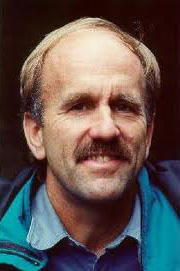
Renowned Expert in the Effects of Chemosensory Systems on Animal Behavior, Naturalist, Author, and Professor of Zoology at Oregon State University
October 17, 2012
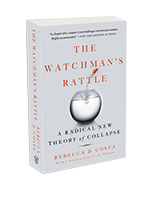
What fascinating and enigmatic creatures we are. A short history of our rocketing ascent into dominance over the fragile patina of life enveloping this planet might extend as far back as 50 thousand years but its most telling and suspenseful chapter is surely the latest one, the one witnessed by most of the readers of this book. At its core, The Watchman's Rattle is one person's panoramic step backward from the breathtaking hubbub of daily news—its wars, failing economies, and biological calamities-- to calmly ask: Who's piloting this ship and where is it going?" Our author for this journey is Rebecca D. Costa, an unabashed optimist herself but hardly one to suffer a polyannish makeover of the social problems that beset us. This is a serious and thoughtful work, as admirable for its cut-to-the-chase analysis of how we become captive to our social complexity, as for its insightful and practical suggestions for finding a way out of it. This is a book worthy of study. Serious as the subject matter is (subtitled 'Thinking our way out of extinction'), The Watchman's Rattle reads like an engaging story, in this case a crime novel. The opening chapters set the stage for us—evolution of the human species and its cognitive abilities for reasoning and the use of powerful tools. The plot thickens as the author samples the history of human social development from its biological underpinnings, exponential ascension to untenable complexity and ultimate demise. The causes of death are the usual suspects for these anthropological intrigues – famine, disease, drought, loss of biodiversity-- but the actual murder weapon, Ms. Costa argues, is always the same: the incapacity of humans to deal with the exponentially expanding complexity of their social systems. How can we escape Hobson's Choice, the certain catastrophic failure of a society too big to manage its unsustainable growth? Insight usually begins with a sudden penetrating vision of the problem at hand. In this regard, the middle of this book shows the author at her best, in a clear and systematic application of biological principles to explain the origins and persistence of human social behaviors both good and bad. By her own characterization Ms. Costa is profoundly influenced by the principles of Darwinian evolution and the elegantly simple power of natural selection to shape both the biological and sociological characteristics of animals for the environments they live in. The transmittable units of social behavior, so-called 'memes', propagate through cultures much as genes do, increasing or decreasing reproductive success in accordance with their fitness for a particular time and place within our culture. Ms. Costa expands this treatment to identify five powerful and self-perpetuating "supermemes", essentially cultural beliefs or habits so powerfully ingrained in our day-to-day lives that expression of even the most reasonable and adaptive alternative actions is suppressed. Our uniquely human powers of imagination, exploration and experimentation are thus effectively imprisoned by these supermemes, ultimately quenching even the most rational applications of knowledge so painstakingly accumulated by science. Beliefs and knowledge, Ms Costa warns us, are dangerously out of balance. The final chapters of The Watchman's Rattle turn our attention to a possible off-ramp from paralytic indecision and fractious failure to act: the cultivation and application of Insightful Thinking. There is much to be learned from modern neurosciences about the human potential for imaginative thought and adaptive behavior. Though not a neuroscientist herself, Ms Costa has no reticence to suggest ways to accelerate our performance in this area. Where she lacks firsthand authority she finds it in the professional expertise of others and translates their thoughts into layman's language for the rest of us. Frequent references to personal experiences with her family and friends give a biographical air to this reading; there are even some recommendations for a better diet (thankfully no recipes) and physical exercise to improve mental functions. Maternal as these admonitions may come across to the reader, they remind each of us that a mind prepared for insightful thinking probably needs better feeding and regular mental exercise to sustain good function throughout life. Each of us has a role to play here — call it Costa's Parallel Incrementalism — where the seemingly insignificant force of one person's unconstrained revaluation of habit becomes the 'Aha' experience that seeds explosive change in others. Evolution of new structure and function is glacially slow for most of our organ systems, but the capacity for enhanced performance of the human brain through synaptic rewiring of neural networks will have immediate affect. It's a good place to begin looking for a solution. The Watchman's Rattle will eventually take its place on the bookshelf amid many other laudable works that move human society one step closer to a stable and graceful cohabitation of this planet. Let us hope that the courage, determination and compassion expressed in these few pages will draw out new appreciation for both the difficulty and attainability of this quintessentially important objective. |
|
|
 |
|
 |