

|
|
 |
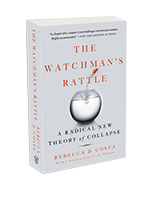
Rebecca CostaForeword to the Watchman's Rattle by Bob Willard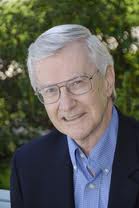
Sustainability Guru and Author of The Sustainability Advantage and The Sustainability Champion's Guidebook
October 17, 2012
Sometimes ideas are randomly planted in my mental garden for years before they are nurtured and finally burst into the sunlight. Four seeds planted over three decades just spouted, thanks to Rebecca Costa. In The March of Folly (1984, Ballantine), Barbara Tuchman describes how folly led to disastrous historical events. Tuchman describes folly as the pursuit by governments of policies that were contrary to their own interests, despite the known availability of other feasible alternatives. Amazingly, the wooden-headed policies were perceived as being counter-productive in their own time and were that of a group, not just a single ruler. For example: folly by Renaissance popes prompted the Protestant secession; folly by the British caused the loss of America; folly by America led to the Vietnam War quagmire. And so on. As I read the book, I suspected that governments were not the only organizations prone to folly and wondered what was really behind such deliberately stupid policies. The first seed of a question was planted. In Ishmael (1992, Bantam), Daniel Quinn deconstructs the dangerous notion that humans are the end product, the pinnacle of biological evolution. He exposes human supremacy as a cultural myth, and asserts that modern civilization is destroying itself as it lives out the myth that evolution is finished—mankind was its goal and we've arrived. Now we "Takers" rule the planet, as we should, and we civilize primitive "Leavers," as we should. Quinn predicts mankind will self-destruct because our mythological story obscures the way the world really works. How could superior beings be so blinded by hubris? Another question- seed was planted. In Collapse (2005, Viking), Jared Diamond describes how ancient civilizations self-destructed. They failed to anticipate a problem; then when the problem arrived they did not perceive it; then they didn't try to solve it; then they tried to solve it but failed. Each of the four steps raised a "Why?" in my head, especially the last three. Were past societies really that ignorant? Are we equally dim-witted? Chalk up question- seed number three. In May 2010, IBM published its CEO Survey, "Capitalizing on Complexity." It is based on face-to-face interviews with 1,541 CEOs worldwide between November 2009 and January 2010—the largest known study of its kind with CEOs from companies of all sizes across 60 countries, representing 33 industries. Previously, CEOs have consistently identified change as their most pressing challenge. Today, CEOs are telling us that the complexity of operating in an increasingly volatile and uncertain world is their primary challenge. And, a surprising number of them told us at they feel ill-equipped to succeed in this drastically different world. The CEOs propose three strategies to cope with this rapid escalation of complexity. First, build operating dexterity to enable agile responses to sudden changes to market conditions. Second, reinvent customer relationships to capitalize on their external insights and co-create new products and services. Thirdly—and most interestingly—embody creative leadership: invite disruptive innovation and experimentation; drop outdated approaches; take balanced risks; be open-minded and inventive; and embrace ambiguity. This intriguing solution-seed was buried with the others. Rebecca Costa gently rediscovered these four seeds of ideas, replanted them into more fertile supermeme frameworks, and nourished them into the bright rays of insight. Her five supermemes—irrational opposition, the personalization of blame, counterfeit correlation, silo thinking, and extreme economics—help explain folly-prone mindsets and ego-laden myths. She postulates how companies, economic systems, and civilizations are hopelessly doomed by the rapid escalation of complexity if we do not escape the trap of supermeme-dominated thinking. As Ishmael suggests, we need to continue to evolve. Otherwise, we will collectively meet the same fate of previous great civilizations. The necessary evolution is not physical, it's mental. Conscious, cause-effect thinking dominates our quick-fix solutions. We need more unconscious flashes of insight to address today's long-term, wickedly complex problems. The wonderful news is that we can train ourselves to creatively lead our way out of our predicaments if we stimulate insightful thinking and undertake parallel experimental initiatives, as suggested by CEOs in the IBM survey. We need evolutionary shortcuts and Rebecca shows us how to more quickly think our way out of another march of folly . . . if we want to. The economic supermeme will be the toughest to overcome. Our current economic model is fundamentally unsustainable. Because it dominates public policy, the economic supermeme dampers our propensity to expose the other four supermemes. It's the elephant in the room. Are our leaders prepared to question today's sacred rules of the game of business and replace them with a sustainable model of commerce . . . and civilization? Or are we genetically wired to repeat one final catastrophe? Surely not. It's time for smarter, wiser, more insightful voices to be heard. Rebecca Costa leads the growing chorus. |
|
 
|
 |
|
 |