

|
|
 |
Articles
December 17, 2013
History of drought in California: Why we choose to let it happen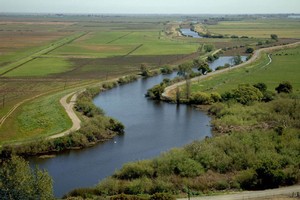
The following excerpt is taken from Rebecca D. Costa's award-winning book, The Watchman's Rattle. For more information, click here I live on the central coast of California, where drought is a growing concern. In an interview with the Los Angeles Times, US Secretary of Energy and Nobel Laureate, Dr. Steven Chu, expressed the urgency of the situation; "I don't think the American public has gripped in its gut what can happen. We are looking at a scenario where there is no more agriculture in California. I don't actually see how they can keep their cities going. I'm hoping the American people will wake up." During the past decade, development has been dramatically restricted along the coast of California because existing homes scarcely have enough water to make it through the summer months. The fresh water we all depend on comes from a small amount of rain fall in January, February, and March. That's it. No matter how nicely our civic leaders paint it, that's the bottom line. Examining a 50-year trend, it is easy to see that the situation worsens a little bit every year. We have a time bomb on our hands, but in California we treat it the same way we treat the threat of earth quakes: We pretend it's not going to happen. In Monterey County, where I live, there has been public debate for at least 3 decades over building desalination plants, drilling more wells, and diverting larger amounts of fresh water from local streams and rivers. But every year working on a permanent cure, such as desalination, is postponed in favor of additional studies, and conservation efforts are stepped up beginning each spring. Economic sanctions are also seasonally put into place to discourage water use. When things get really bad, water is rationed. For 6 years now, we have been ordered to stop watering lawns and landscaping in July. Last year, I cut my water use in half, let my yard die, and watched my water bill triple. It was a sobering experience. When I show up at the local water board meetings and attempt to explain why conservation is not a permanent solution, but rather a short term mitigation, everyone's eyes roll back in their heads. "Get rid of your grass and replace your landscaping with drought tolerant plants" they say. I really wish it were that simple. Conservation buys us time, but it also delays the inevitable, as the root causes worsen. Regrettably, the more time we buy, the more diluted we become that we have actually solved the problem. I once spent three months assembling a report with charts and graphs showing our diminishing water supply by specific wells and rivers over a twelve year period. The trends were undeniable and the solution clear: We need to manufacture more water. There is no possibility of conserving our way out of the problem. But "creating" drinking water is a politically controversial and difficult task. We feel much more comfortable with continued conservation, even though logically we know this can't sustain us in the long run. We are swimmers flailing against the powerful undertow of a cognitive threshold. |
|

Articles
2021
October
July
February
2020
March
2019
December
January
2018
February
January
2017
December
October
September
August
July
Article Archive >
|
 |
|
 |