

|
|
 |
Articles
October 5, 2014
Did the U.S. Disrupt ISIL's Lucrative Hostages-For-Money Market?Speaking on The Costa Report, Josh Rushing, reporter for Al-Jazeera America, claims the way we describe ISIL, "is extremely important and probably under-discussed." According to Rushing, the turmoil is best characterized as an "ethnic conflict" and a "religious-sectarian conflict." The situation cannot be addressed as a simple case of right versus wrong. "There are no good guys," he emphatically stated. "The simple binary that we tend to use in the U.S. is good versus evil… I think that is dangerously overly simplistic." Take the beheadings of American hostages James Foley and Steven Sotloff for example, an act described as retaliation for U.S. military involvement. Rushing points out that prior to the beheadings, European governments had been willing to pay ransom fees in the millions. According to Rushing, ransoms came to represent "a significant source of income for the Islamic state." In other words, a lucrative market for western hostages had already been operating successfully for many years; it was only when the United States refused to pay ransom for American hostages that the business was disrupted. Rushing's revelation that the hostages were merely a commodity which could be exchanged for money makes it clear that the storyline calling the beheadings a response to U.S. airstrikes was retrofitted once ISIL was unable to extract payment. By refusing to pay, the U.S. government drew a line in the sand, and set a dangerous precedent for other European customers of ISIL - thereby bringing an end to the once lucrative hostages-for-money business. But Rushing has another worry. The kidnapping of journalists has caused news agencies to avoid sending reporters into these dangerous areas – leading to a lack of reporting or "black hole" where intelligence is concerned. He notes that there is already a troubling lack of intelligence about what is occurring on the front lines, a problem he sums up in a statement echoed by former Secretary of Homeland Security Tom Ridge, former Secretary of Defense Leon Panetta, and others: "We don't have human intelligence where we need it the most."
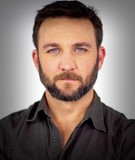
Week of Sep 29, 2014 Josh Rushing
Josh Rushing is the co-host of Al Jazeera’s “Fault Lines,” an award winning investigative documentary series produced and broadcasted by Al Jazeera English and Al Jazeera America. Since helping launch the show in 2009, Rushing has appeared in 28 episodes of “Fault Lines,” covering a wide range of issues such as NSA surveillance and the drug war. Prior to joining Al Jazeera English in 2005, Rushing served in the U.S. Marine Corps. Rushing was featured in the motion picture documentary “Control Room” and his writing and photography have been published in several media outlets, including National Geographic.
Week of Sep 29, 2014 Josh Rushing
Josh Rushing is the co-host of Al Jazeera’s “Fault Lines,” an award winning investigative documentary series produced and broadcasted by Al Jazeera English and Al Jazeera America. Since helping launch the show in 2009, Rushing has appeared in 28 episodes of “Fault Lines,” covering a wide range of issues such as NSA surveillance and the drug war. Prior to joining Al Jazeera English in 2005, Rushing served in the U.S. Marine Corps. Rushing was featured in the motion picture documentary “Control Room” and his writing and photography have been published in several media outlets, including National Geographic. |
|

Articles
2021
October
July
February
2020
March
2019
December
January
2018
February
January
2017
December
October
September
August
July
Article Archive >
|
 |
|
 |