|
|
 |
Rebecca CostaThe Truth About China and North Korea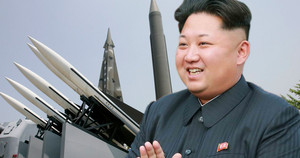
July 13, 2017
In the first quarter of 2017, Chinese exports to North Korea rose 40 percent. We need look no further than this single fact to acknowledge that relying on China to reign-in North Korea's nuclear program has failed. Which begs the question: Why isn't China concerned about a radical, nuclear regime along their borders? The answer is simple: There is something China fears more than an unstable neighbor and world opinion. China's worst-case scenario is a unified, democratic Korea with U.S. troops and bases along their border. The one thing standing in the way of China's greater threat is North Korea. The Chinese government has weighed its options and chosen the lesser of two evils. They have upped trade with North Korea and will continue to prop up Kim Jong-Un's regime as a safeguard against western imperialism. The fact is, the escalation of U.S. military forces in and around South Korea has only served to heighten China's resolve. This strategy has had the exact opposite effect U.S. leaders intended it to. At the heart of the stand-off we are witnessing between the U.S., North Korea, and China is the issue of "territoriality." In nature, organisms are known to fight to the death to protect territorial boundaries. Any encroachment on the territory that a bear, mountain lion, or troupe of apes rely on for sustenance and survival produces aggressive warnings, followed by violence. In this way, when human beings, or nations, feel their territorial boundaries are threatened, they respond by issuing similar warnings, and prepare to defend their borders at all costs. What applies to the natural world, also applies to humankind. If territoriality is the key to soliciting China's cooperation – then what can be done? Here again, the answer is self-evident. China will abandon their support for North Korea when the greater of the two threats is eliminated. From a practical standpoint, this means two things. First, the U.S. must offer to remove all U.S. military presence in South Korea in exchange for China's promise to eradicate North Korea's nuclear arms capabilities. And second, China, the U.S. and other nations must agree to stay out of unification efforts within Korea, regardless of the political outcome. In other words, once China no longer needs North Korea as a buffer against western encroachment, they will abandon support for Kim Jong Un's regime. Until we take steps to address "territoriality," expect Chinese imports – including computers and other equipment needed to support North Korea's nuclear program – to increase, further emboldening one of the most dangerous regimes in modern times. |
|
|
 |
|
 |