|
|
 |
Rebecca CostaHomeowner vs Renter: Can it affect your happiness?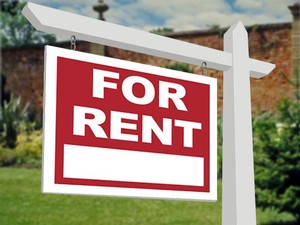
December 5, 2013
Recently, I sold my house and began looking for one to buy. Before I jumped on the internet, I got out a blank sheet of paper to figure out how much I could put down and what the payments might look like. As a potential homeowner, you don't start with what you want, you start with what you can afford. There are a lot of online calculators available these days, which make the break down of payments and property taxes easy to determine. They automatically add your property taxes and insurance to your mortgage payment. Once I figured out my payments, I added a little every month for home repairs. Over time the roof will need replacing, as well as the kitchen faucet and windows. I totaled it all up and reminded myself that any figure south of what I pay in rent every month will be savings I can bank. But here's where things get interesting. My first revelation was that it was cheaper to rent. And more convenient too. I've been a homeowner for 35 years. I grew up in a time where being a homeowner was a sign of responsibility and success. But why is there such a stigma against renting, and can renting affect you overall feelings of happiness? After I sold my last house I was lucky to rent a pristine little cottage surrounded by trees, a view of the mountains, and a five minute drive to the State Park where my dog and I take our morning hike and cool off in the river. I no longer spend my weekends on home repair. I make one phone call and someone promptly arrives to fix the problem. I don't worry about property taxes (which keep going up), insurances (homeowner, fire, earthquake and liability which also keep going up), my home loan or maintenance. Home improvement projects are also off the table, leaving me with more time for other things now. Although I admit that I did buy a truckload of plants last weekend and restored the flower beds. No system is perfect. My second discovery was the condition of the houses that I could afford to purchase. For the most part they were small, dark and rundown. Nothing I looked at came close to my rental. For example, one of my must-haves was "no road noise" from the busy artery which slices down the middle of the valley where I live. A realtor took me to see a house where the front door was a hundred feet off the road. As we pulled up I said – "What about the road noise I told you about?" She replied, "The house has double-paned windows." Double-paned windows? I guess she's never had clients who opened their windows or stepped into their yards! My third discovery? Qualifying for a home loan isn't what it used to be. It's a battle to get a home loan without a regular job and paycheck, (if you're a retired baby boomer forget it – there's no way to refinance or buy) a nearly perfect credit score, and ability to put twenty percent or more down. Even a relative in the mortgage business won't help you. A banker recently told me they regularly turn down eight out of ten home loan applications. Which makes perfect sense. Why would a bank make a home loan at four and five percent when they can get twenty-nine to eighty percent on credit cards (yes, I said eighty percent: check out First Premiere Bank). And why put that much capital at risk on one loan when you could spread the risk around on smaller revolving loans? If the collateral meant to secure a real estate loan can't be trusted to cover the loan amount, then mortgages start looking a lot like credit card loans – only scarier. Today, it doesn't matter how many assets you have or how long you've worked – which in my case is forty years. You stand in the same long line as everyone else who is no longer qualified for a mortgage. Do I want to put myself through all that? Not if I can shed the stigma of renting, which, to many people on the outside, means I can't afford to own a house. But it's not true - I can afford to. I just wouldn't be as happy as I am in my rental. And I am beginning to think that may matter more. Rebecca D. Costa is an American sociobiologist who offers an evolutionary explanation for current events and emerging trends. A new voice in the mold of Thomas Friedman and Malcolm Gladwell, Costa attributes modern consternation - from terrorism, crime on Wall Street, epidemic obesity and upheaval in the Middle East - to genetic imperatives. Retiring from a career in Silicon Valley, Costa spent six years researching and writing The Watchman's Rattle. The success of the book in 25 countries led to a weekly syndicated radio program called The Costa Report. Costa is presently represented by the American Program Bureau and the Scott Meredith Literary Agency. For more information visit www.rebeccacosta.com. |
|
|
 |
|
 |