$node = stdClass Object (
[nid] => [548]
[type] => [page]
[language] => [en]
[uid] => [1]
[status] => [1]
[created] => [1305338038]
[changed] => [1305338038]
[comment] => [0]
[promote] => [0]
[moderate] => [0]
[sticky] => [0]
[tnid] => [0]
[translate] => [0]
[vid] => [548]
[revision_uid] => [1]
[title] => [Executive Director of Greenpeace USA, Phil Radford, Says Too Much Emphasis on Environmental Policy and Lobbying]
[body] => [<p><strong> </strong></p>
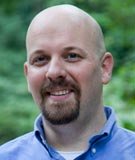
<p><strong>San Jose, CA â April 22, 2011 â</strong> The Executive Director of Greenpeace USA, Phil Radford, gives the United States a âCâ on its environmental report card. In an exclusive interview with the host of <br /> <em>The Costa Report, </em>Rebecca Costa, on KSCO AM 1080, Radford said, âOver time, the environmental community has become very policy and lobbying heavy and has gotten away from being an environmental âmovement.â We need to re-earn the âmovementâ (part) by supporting community groups.â</p>
<p>The outspoken director urged environmental activists to focus on changing corporate behavior along with placing a greater emphasis on community groups which are âfighting for clean air, clean water, and a safe community.â According to Radford, campaign finance laws have allowed corporations to become too powerful in Washington DC and lobbying efforts by environmental groups are not as effective as working with grass roots organizations. He continued, âItâs always been great leaders - who arenât paid, and arenât trained, but are just really passionate about whatâs happening to their families - who have stood up and made the biggest waves in society.â He recalls the work of the original founders of Greenpeace who he described as âordinary citizensâ who chartered a boat to Amchitka Island in 1971 to protest the detonation of nuclear weapons at the tectonically unstable site. âThey didnât know if they would live or die, but they knew they had to do something.â</p>
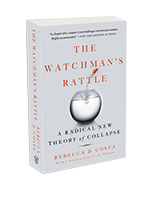
<p>Costa, whose book <em>The Watchmanâs Rattle: Thinking Our Way Out of Extinction </em> was recognized by ABC News affiliates as one of the top âgreen booksâ of 2010, asked Radford why such a large segment of the population continues to deny the existence of global warming and other environmental crises. Radford responded, âSome of these problems are so big that itâs unbelievable that they even exist. A lot of people donât want to believe it â itâs overwhelming - theyâd rather focus on things they have control over day to day.â He continued, â(In addition), corporations like Koch Industries - one of the largest businesses in the United States - have spent three times more money than Exxon spreading misinformation about global warming. So the confusion about global warming is not a debate between scientists, itâs a corporate- funded PR event.â </p>
<p>Though Radford sympathizes with the confusion caused by misinformation, he urges individuals to continue to organize on a local level to stop damage to the environment. In Radfordâs view, the dire circumstances at the Daichi nuclear power plant in Fukushima, Japan, not only points to the dangers of building plants on known earthquake faults, but reveals the growing threat that storing radioactive waste onsite poses. âAll of these nuclear plants are completely exposed,â claims Radford.</p>
<p>On the occasion of Earth Day, what does the Executive Director of Greenpeace USA feel is needed to turn a âCâ to an âAâ on Americaâs environmental report card? âIt all comes down to how the people in each state feel â how important the people living there feel the environment is and what they are prepared to do.â</p>
<p><strong>About Phil Radford</strong></p>
<p>Phil Radford became the Executive Director of Greenpeace USA in 2009 after serving as the organizationâs grass roots director since 2003. Radfordâs âFrontlineâ initiative nearly doubled Greenpeace USAâs budget to $30 million. He is also credited with leveraging social media to organize and mobilize various environmental factions in the U.S. Prior to joining Greenpeace Radford was the founder of Power Shift, a company which worked with city governments to make renewable energy investments for municipal buildings. Mr. Radford earned his Bachelors degree from Washington University and was certified in non-profit management by Georgetown University. </p>
<p><strong>About Rebecca D. Costa</strong></p>
<p>Rebecca Costa is a sociobiologist who offers a genetic explanation for current events, emerging trends and individual behavior. A thought-leader and new voice in the mold of Thomas Friedman, Malcolm Gladwell and Jared Diamond, Costa examines âthe big pictureââ tracing everything from terrorism, crime on Wall Street, epidemic obesity and upheaval in the Middle East to evolutionary forces. Retiring at the zenith of her executive career in Silicon Valley, Costa spent six years researching and writing <em>The Watchmanâs Rattle: Thinking Our Way Out of Extinction.</em> The success of Costaâs book led to a weekly radio program in 2010 called <em>Rattler Radio.</em> In 2011 the program was renamed and became nationally syndicated as <em>The Costa Report. </em>A former CEO and founder of one of the largest marketing firms in Silicon Valley (sold in 1997 to J. Walter Thompson), Costa developed an extensive track record of introducing new technologies. Her clients included industry giants such as Hewlett-Packard, Apple Computer, Oracle Corporation, Seibel Systems, 3M, Amdahl, and General Electric Corporation. Additional information available at <a href="http://www.rebeccacosta.com/">www.rebeccacosta.com</a></p>
<p><strong>About KSCO </strong></p>
<p>KSCO AM 1080 has served the Central Coast of California since 1947 and remains one of the last independent, locally owned-and-operated radio stations in the United States. The station broadcasts the top names in syndication as well as over 87 hours per week of locally-originated news talk, some of which is distributed via satellite to other stations nationwide. In the early 1950âs, due to its signal strength, KSCO was designated as the Emergency Broadcast System station for Central California and has received much praise from local communities and agencies for its extraordinary service during times of earthquakes, floods, fires, storms and power/communications outages.</p>
]
[log] => []
[revision_timestamp] => [1305338038]
[format] => [2]
[name] => [drupal]
[picture] => []
[data] => [a:3:{s:7:"contact";i:0;s:13:"form_build_id";s:37:"form-757b0e9ed2c904ab778ce38f0a582b20";s:9:"nodewords";a:9:{s:8:"abstract";a:1:{s:5:"value";s:0:"";}s:9:"canonical";a:1:{s:5:"value";s:0:"";}s:9:"copyright";a:1:{s:5:"value";s:0:"";}s:11:"description";a:1:{s:5:"value";s:306:"The Watchman's Rattle, a book that connects the dots between crime, oil prices, Wall Street, global warming, nuclear waste and childhood violence. Author Rebecca D. Costa reveals the four telltale patterns which paralyze innovative thinking, and with it, a civilization's ability to solve complex problems.";}s:8:"keywords";a:1:{s:5:"value";s:143:"Watchman's Rattle, Watchman, Rebecca D. Costa, Rebecca Costa, Oil Prices, Wall Street, Crime, Global Warning, Nuclear Waste, Childhood Violence";}s:13:"revisit-after";a:1:{s:5:"value";s:1:"1";}s:6:"robots";a:2:{s:5:"value";a:6:{s:9:"noarchive";i:0;s:8:"nofollow";i:0;s:7:"noindex";i:0;s:5:"noodp";i:0;s:9:"nosnippet";i:0;s:6:"noydir";i:0;}s:11:"use_default";i:0;}s:8:"dc.title";a:1:{s:5:"value";s:0:"";}s:8:"location";a:2:{s:8:"latitude";s:0:"";s:9:"longitude";s:0:"";}}}]
[path] => [press/phil-radford]
[taxonomy] => array (
)
[page_title] => []
[nodewords] => array (
[abstract] => array (
[value] => []
)
[canonical] => array (
[value] => []
)
[copyright] => array (
[value] => []
)
[dc.contributor] => array (
[value] => []
)
[dc.creator] => array (
[value] => []
)
[dc.date] => array (
[value] => array (
[year] => [2011]
[month] => [5]
[day] => [13]
)
)
[dc.title] => array (
[value] => []
)
[description] => array (
[value] => [The Watchman's Rattle, a book that connects the dots between crime, oil prices, Wall Street, global warming, nuclear waste and childhood violence. Author Rebecca D. Costa reveals the four telltale patterns which paralyze innovative thinking, and with it, a civilization's ability to solve complex problems.]
)
[keywords] => array (
[value] => [Watchman's Rattle, Watchman, Rebecca D. Costa, Rebecca Costa, Oil Prices, Wall Street, Crime, Global Warning, Nuclear Waste, Childhood Violence]
)
[location] => array (
[latitude] => []
[longitude] => []
)
[pics-label] => array (
[value] => []
)
[revisit-after] => array (
[value] => [1]
)
[robots] => array (
[value] => array (
[noarchive] => [0]
[nofollow] => [0]
[noindex] => [0]
[noodp] => [0]
[nosnippet] => [0]
[noydir] => [0]
)
[use_default] => [0]
)
)
[build_mode] => [0]
[readmore] => [1]
[content] => array (
[#content_extra_fields] => array (
[title] => array (
[label] => [Title]
[description] => [Node module form.]
[weight] => [-5]
)
[body_field] => array (
[label] => [Body]
[description] => [Node module form.]
[weight] => [0]
[view] => [body]
)
[revision_information] => array (
[label] => [Revision information]
[description] => [Node module form.]
[weight] => [20]
)
[author] => array (
[label] => [Authoring information]
[description] => [Node module form.]
[weight] => [20]
)
[options] => array (
[label] => [Publishing options]
[description] => [Node module form.]
[weight] => [25]
)
[menu] => array (
[label] => [Menu settings]
[description] => [Menu module form.]
[weight] => [-2]
)
[path] => array (
[label] => [Path settings]
[description] => [Path module form.]
[weight] => [30]
)
[page_title] => array (
[label] => [Page Title]
[description] => [Page Title form.]
[weight] => [-4]
)
[nodewords] => array (
[label] => [Meta tags]
[description] => [Meta tags fieldset.]
[weight] => [10]
)
)
[#pre_render] => array (
[0] => [content_alter_extra_weights]
)
[body] => array (
[#weight] => [0]
[#value] => [<p><strong> </strong></p>
<p><strong>San Jose, CA â April 22, 2011 â</strong> The Executive Director of Greenpeace USA, Phil Radford, gives the United States a âCâ on its environmental report card. In an exclusive interview with the host of <br /> <em>The Costa Report, </em>Rebecca Costa, on KSCO AM 1080, Radford said, âOver time, the environmental community has become very policy and lobbying heavy and has gotten away from being an environmental âmovement.â We need to re-earn the âmovementâ (part) by supporting community groups.â</p>
<p>The outspoken director urged environmental activists to focus on changing corporate behavior along with placing a greater emphasis on community groups which are âfighting for clean air, clean water, and a safe community.â According to Radford, campaign finance laws have allowed corporations to become too powerful in Washington DC and lobbying efforts by environmental groups are not as effective as working with grass roots organizations. He continued, âItâs always been great leaders - who arenât paid, and arenât trained, but are just really passionate about whatâs happening to their families - who have stood up and made the biggest waves in society.â He recalls the work of the original founders of Greenpeace who he described as âordinary citizensâ who chartered a boat to Amchitka Island in 1971 to protest the detonation of nuclear weapons at the tectonically unstable site. âThey didnât know if they would live or die, but they knew they had to do something.â</p>
<p>Costa, whose book <em>The Watchmanâs Rattle: Thinking Our Way Out of Extinction </em> was recognized by ABC News affiliates as one of the top âgreen booksâ of 2010, asked Radford why such a large segment of the population continues to deny the existence of global warming and other environmental crises. Radford responded, âSome of these problems are so big that itâs unbelievable that they even exist. A lot of people donât want to believe it â itâs overwhelming - theyâd rather focus on things they have control over day to day.â He continued, â(In addition), corporations like Koch Industries - one of the largest businesses in the United States - have spent three times more money than Exxon spreading misinformation about global warming. So the confusion about global warming is not a debate between scientists, itâs a corporate- funded PR event.â </p>
<p>Though Radford sympathizes with the confusion caused by misinformation, he urges individuals to continue to organize on a local level to stop damage to the environment. In Radfordâs view, the dire circumstances at the Daichi nuclear power plant in Fukushima, Japan, not only points to the dangers of building plants on known earthquake faults, but reveals the growing threat that storing radioactive waste onsite poses. âAll of these nuclear plants are completely exposed,â claims Radford.</p>
<p>On the occasion of Earth Day, what does the Executive Director of Greenpeace USA feel is needed to turn a âCâ to an âAâ on Americaâs environmental report card? âIt all comes down to how the people in each state feel â how important the people living there feel the environment is and what they are prepared to do.â</p>
<p><strong>About Phil Radford</strong></p>
<p>Phil Radford became the Executive Director of Greenpeace USA in 2009 after serving as the organizationâs grass roots director since 2003. Radfordâs âFrontlineâ initiative nearly doubled Greenpeace USAâs budget to $30 million. He is also credited with leveraging social media to organize and mobilize various environmental factions in the U.S. Prior to joining Greenpeace Radford was the founder of Power Shift, a company which worked with city governments to make renewable energy investments for municipal buildings. Mr. Radford earned his Bachelors degree from Washington University and was certified in non-profit management by Georgetown University. </p>
<p><strong>About Rebecca D. Costa</strong></p>
<p>Rebecca Costa is a sociobiologist who offers a genetic explanation for current events, emerging trends and individual behavior. A thought-leader and new voice in the mold of Thomas Friedman, Malcolm Gladwell and Jared Diamond, Costa examines âthe big pictureââ tracing everything from terrorism, crime on Wall Street, epidemic obesity and upheaval in the Middle East to evolutionary forces. Retiring at the zenith of her executive career in Silicon Valley, Costa spent six years researching and writing <em>The Watchmanâs Rattle: Thinking Our Way Out of Extinction.</em> The success of Costaâs book led to a weekly radio program in 2010 called <em>Rattler Radio.</em> In 2011 the program was renamed and became nationally syndicated as <em>The Costa Report. </em>A former CEO and founder of one of the largest marketing firms in Silicon Valley (sold in 1997 to J. Walter Thompson), Costa developed an extensive track record of introducing new technologies. Her clients included industry giants such as Hewlett-Packard, Apple Computer, Oracle Corporation, Seibel Systems, 3M, Amdahl, and General Electric Corporation. Additional information available at <a href="http://www.rebeccacosta.com/">www.rebeccacosta.com</a></p>
<p><strong>About KSCO </strong></p>
<p>KSCO AM 1080 has served the Central Coast of California since 1947 and remains one of the last independent, locally owned-and-operated radio stations in the United States. The station broadcasts the top names in syndication as well as over 87 hours per week of locally-originated news talk, some of which is distributed via satellite to other stations nationwide. In the early 1950âs, due to its signal strength, KSCO was designated as the Emergency Broadcast System station for Central California and has received much praise from local communities and agencies for its extraordinary service during times of earthquakes, floods, fires, storms and power/communications outages.</p>
]
[#title] => []
[#description] => []
[#printed] => [1]
)
[#title] => []
[#description] => []
[#children] => [<p><strong> </strong></p>
<p><strong>San Jose, CA â April 22, 2011 â</strong> The Executive Director of Greenpeace USA, Phil Radford, gives the United States a âCâ on its environmental report card. In an exclusive interview with the host of <br /> <em>The Costa Report, </em>Rebecca Costa, on KSCO AM 1080, Radford said, âOver time, the environmental community has become very policy and lobbying heavy and has gotten away from being an environmental âmovement.â We need to re-earn the âmovementâ (part) by supporting community groups.â</p>
<p>The outspoken director urged environmental activists to focus on changing corporate behavior along with placing a greater emphasis on community groups which are âfighting for clean air, clean water, and a safe community.â According to Radford, campaign finance laws have allowed corporations to become too powerful in Washington DC and lobbying efforts by environmental groups are not as effective as working with grass roots organizations. He continued, âItâs always been great leaders - who arenât paid, and arenât trained, but are just really passionate about whatâs happening to their families - who have stood up and made the biggest waves in society.â He recalls the work of the original founders of Greenpeace who he described as âordinary citizensâ who chartered a boat to Amchitka Island in 1971 to protest the detonation of nuclear weapons at the tectonically unstable site. âThey didnât know if they would live or die, but they knew they had to do something.â</p>
<p>Costa, whose book <em>The Watchmanâs Rattle: Thinking Our Way Out of Extinction </em> was recognized by ABC News affiliates as one of the top âgreen booksâ of 2010, asked Radford why such a large segment of the population continues to deny the existence of global warming and other environmental crises. Radford responded, âSome of these problems are so big that itâs unbelievable that they even exist. A lot of people donât want to believe it â itâs overwhelming - theyâd rather focus on things they have control over day to day.â He continued, â(In addition), corporations like Koch Industries - one of the largest businesses in the United States - have spent three times more money than Exxon spreading misinformation about global warming. So the confusion about global warming is not a debate between scientists, itâs a corporate- funded PR event.â </p>
<p>Though Radford sympathizes with the confusion caused by misinformation, he urges individuals to continue to organize on a local level to stop damage to the environment. In Radfordâs view, the dire circumstances at the Daichi nuclear power plant in Fukushima, Japan, not only points to the dangers of building plants on known earthquake faults, but reveals the growing threat that storing radioactive waste onsite poses. âAll of these nuclear plants are completely exposed,â claims Radford.</p>
<p>On the occasion of Earth Day, what does the Executive Director of Greenpeace USA feel is needed to turn a âCâ to an âAâ on Americaâs environmental report card? âIt all comes down to how the people in each state feel â how important the people living there feel the environment is and what they are prepared to do.â</p>
<p><strong>About Phil Radford</strong></p>
<p>Phil Radford became the Executive Director of Greenpeace USA in 2009 after serving as the organizationâs grass roots director since 2003. Radfordâs âFrontlineâ initiative nearly doubled Greenpeace USAâs budget to $30 million. He is also credited with leveraging social media to organize and mobilize various environmental factions in the U.S. Prior to joining Greenpeace Radford was the founder of Power Shift, a company which worked with city governments to make renewable energy investments for municipal buildings. Mr. Radford earned his Bachelors degree from Washington University and was certified in non-profit management by Georgetown University. </p>
<p><strong>About Rebecca D. Costa</strong></p>
<p>Rebecca Costa is a sociobiologist who offers a genetic explanation for current events, emerging trends and individual behavior. A thought-leader and new voice in the mold of Thomas Friedman, Malcolm Gladwell and Jared Diamond, Costa examines âthe big pictureââ tracing everything from terrorism, crime on Wall Street, epidemic obesity and upheaval in the Middle East to evolutionary forces. Retiring at the zenith of her executive career in Silicon Valley, Costa spent six years researching and writing <em>The Watchmanâs Rattle: Thinking Our Way Out of Extinction.</em> The success of Costaâs book led to a weekly radio program in 2010 called <em>Rattler Radio.</em> In 2011 the program was renamed and became nationally syndicated as <em>The Costa Report. </em>A former CEO and founder of one of the largest marketing firms in Silicon Valley (sold in 1997 to J. Walter Thompson), Costa developed an extensive track record of introducing new technologies. Her clients included industry giants such as Hewlett-Packard, Apple Computer, Oracle Corporation, Seibel Systems, 3M, Amdahl, and General Electric Corporation. Additional information available at <a href="http://www.rebeccacosta.com/">www.rebeccacosta.com</a></p>
<p><strong>About KSCO </strong></p>
<p>KSCO AM 1080 has served the Central Coast of California since 1947 and remains one of the last independent, locally owned-and-operated radio stations in the United States. The station broadcasts the top names in syndication as well as over 87 hours per week of locally-originated news talk, some of which is distributed via satellite to other stations nationwide. In the early 1950âs, due to its signal strength, KSCO was designated as the Emergency Broadcast System station for Central California and has received much praise from local communities and agencies for its extraordinary service during times of earthquakes, floods, fires, storms and power/communications outages.</p>
]
[#printed] => [1]
)
[links] => array (
)
);